since 1976

since 1976
By Lee Pang Seng
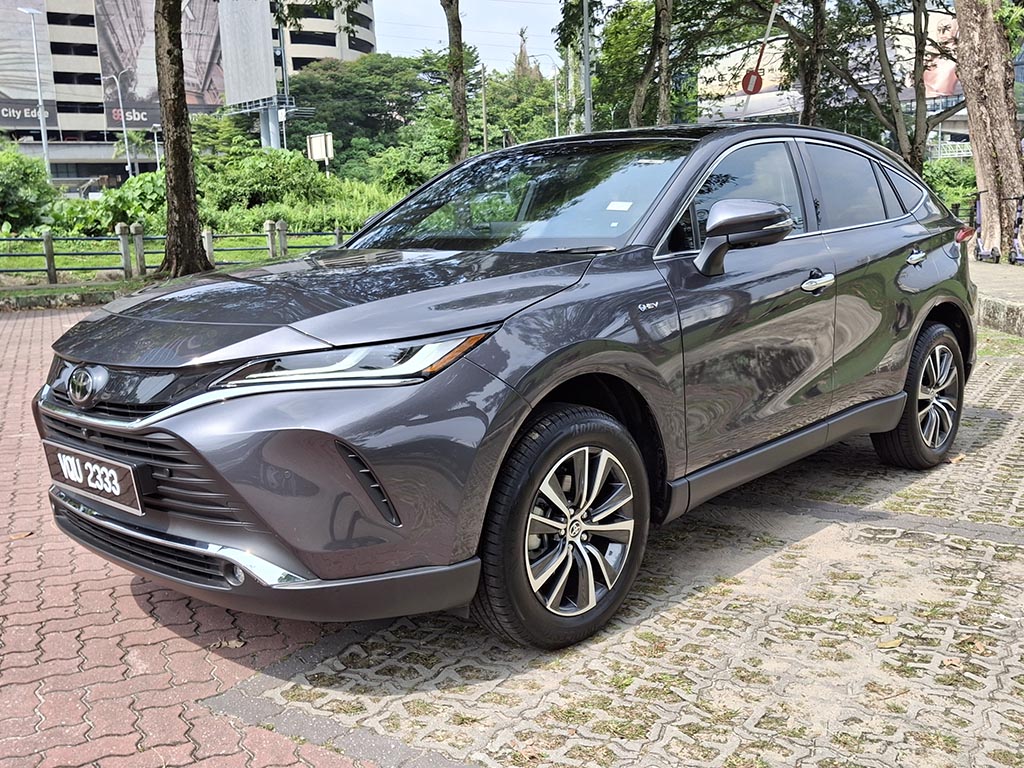
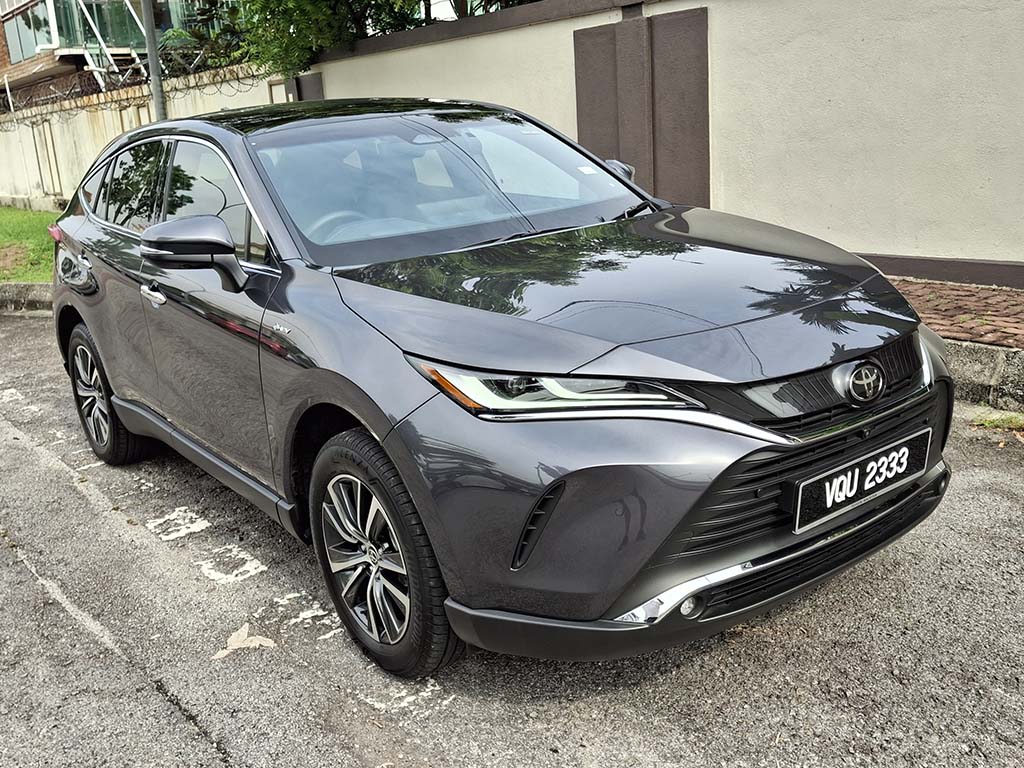
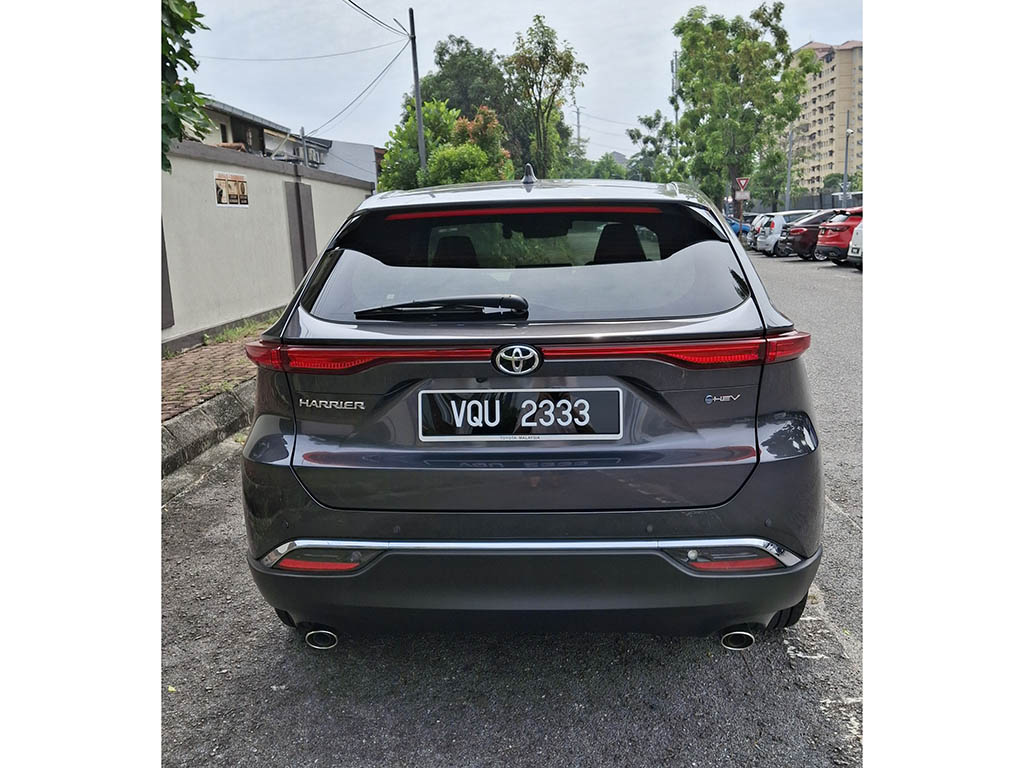
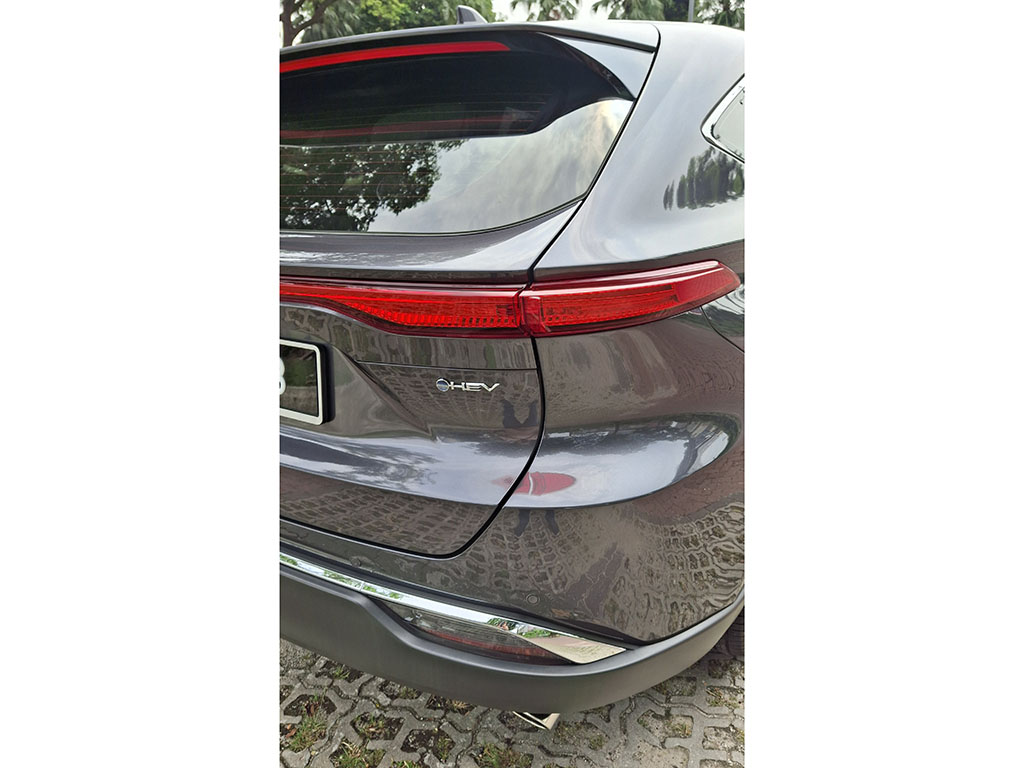
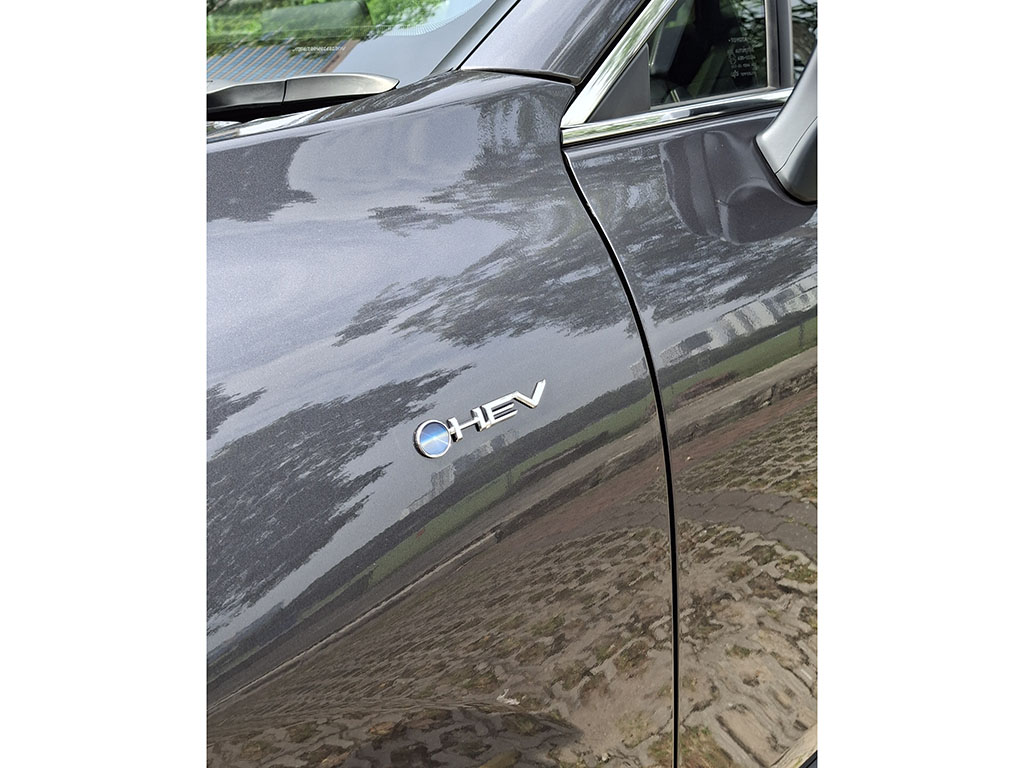
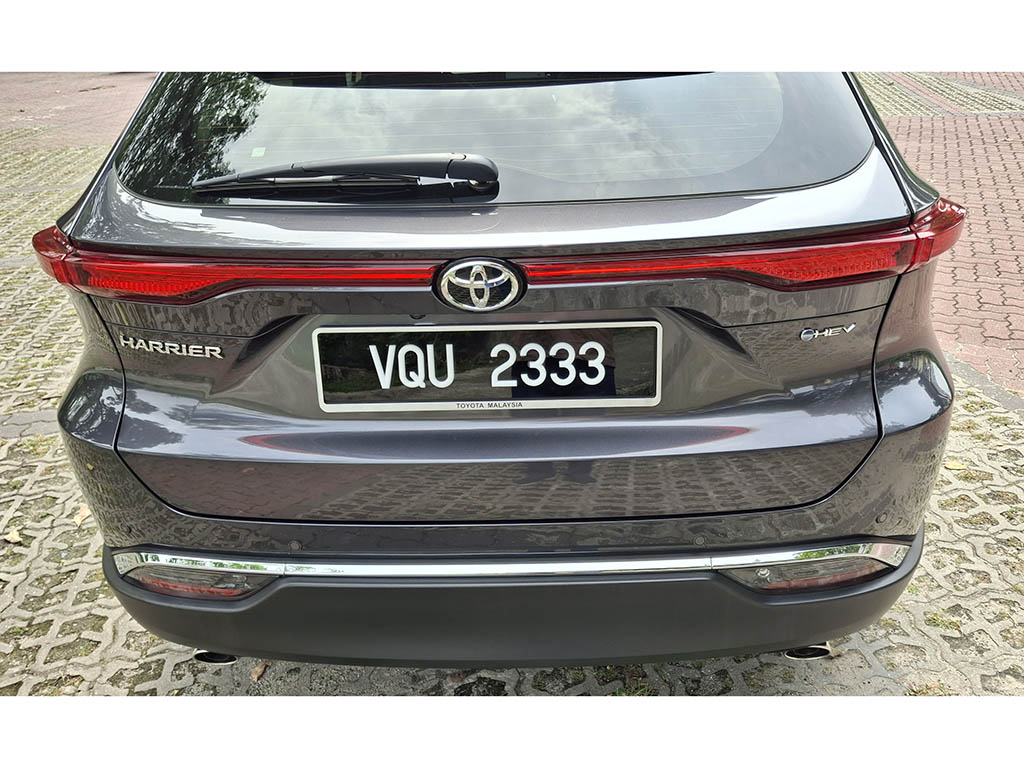
THE latest Toyota Harrier joins the hybrid fraternity with the HEV (Hybrid Electric Vehicle) 2.5 early this year to keep abreast of automotive trends. This premium Crossover is not a Plug-in Hybrid Electric Vehicle (PHEV) with which the electric battery needs to be charged regularly.
Instead, it is somewhere between a mild hybrid and PHEV as it comes with a fairly big lithium-ion battery that is described as part of a ‘self-charging’ hybrid system. Toyota is not new to making hybrid vehicles, having produced the Prius Hybrid Synergy Drive car since 1997 with five generations introduced since then.
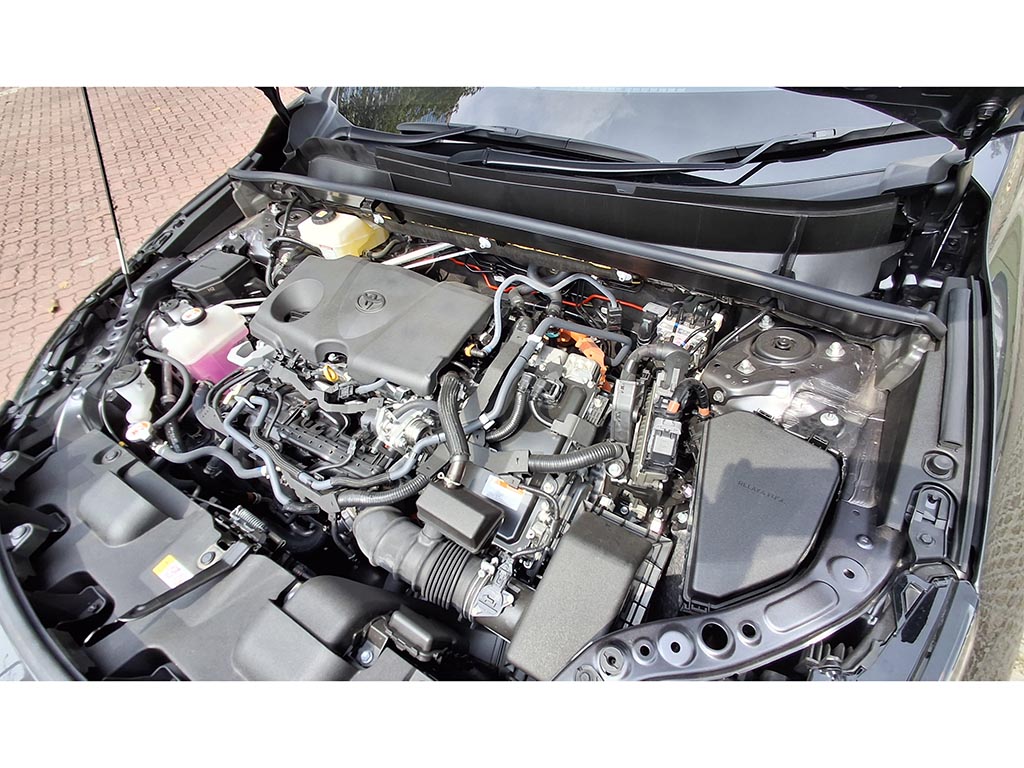
The system in the Harrier HEV is a 2.5-litre (2487cc) Dynamic Force Engine that is paired with a fourth-generation hybrid system. The engine delivers 131kW (178ps) at 5700rpm and 221Nm from 3600rpm to 5200rpm. The electric motor is rated at 88kW and 202Nm. The combined engine-hybrid system output is put at 160kW (217ps) although no combined torque output is given.
The engine and electric power drive the front wheels via an E-CVT (electronically controlled continuously variable transmission) as per the driving situation and the vehicle’s average fuel consumption is said to be 4.7 L/100km (21.2km/h). That’s reasonably good for a 2.5-litre engine that’s assisted by the electric motor in initial acceleration. Toyota has not provided how fast the Harrier HEV would accelerate from rest to 100km/h but the top speed is understandably modest at 180km/h.
While the imported Harrier HEV is targeted at ‘discerning’ customers who wouldn’t mind paying a premium for it (RM289,000 on the road without insurance with five-year vehicle warranty and eight-year hybrid warranty), UMW Toyota Motor faces the same market dilemma it encounters with the Alphard/Vellfire range: The reconditioned vehicle market.
In fact, this problem started much earlier with the Harrier (which was also introduced in 1997) as it garnered good market response as a recon vehicle way back then. Unfortunately for the Toyota distributor, the problem continues to this day leading to a profusion of recon models from Japan – Harrier, Alphard/Vellfire and even a boxy mini MPV (multipurpose vehicle) called Tank (nothing to do with the GWM Tank SUV).
Against this unflattering backdrop, you could say the Harrier sold by UMW Toyota Motor is a victim of its own success. Nevertheless, the Harrier 2.5 HEV stands tall as the premium McCoy that should command respect and esteem for well-off Toyota customers. And that is how we would approach our review of this Harrier, which was launched in March this year.
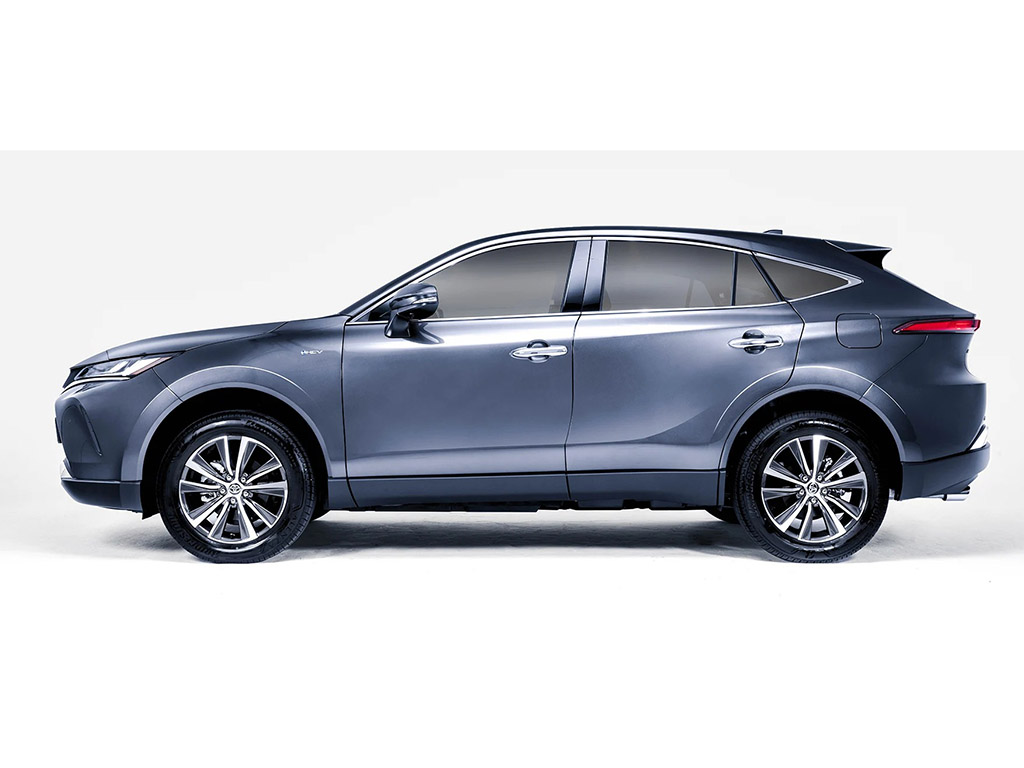
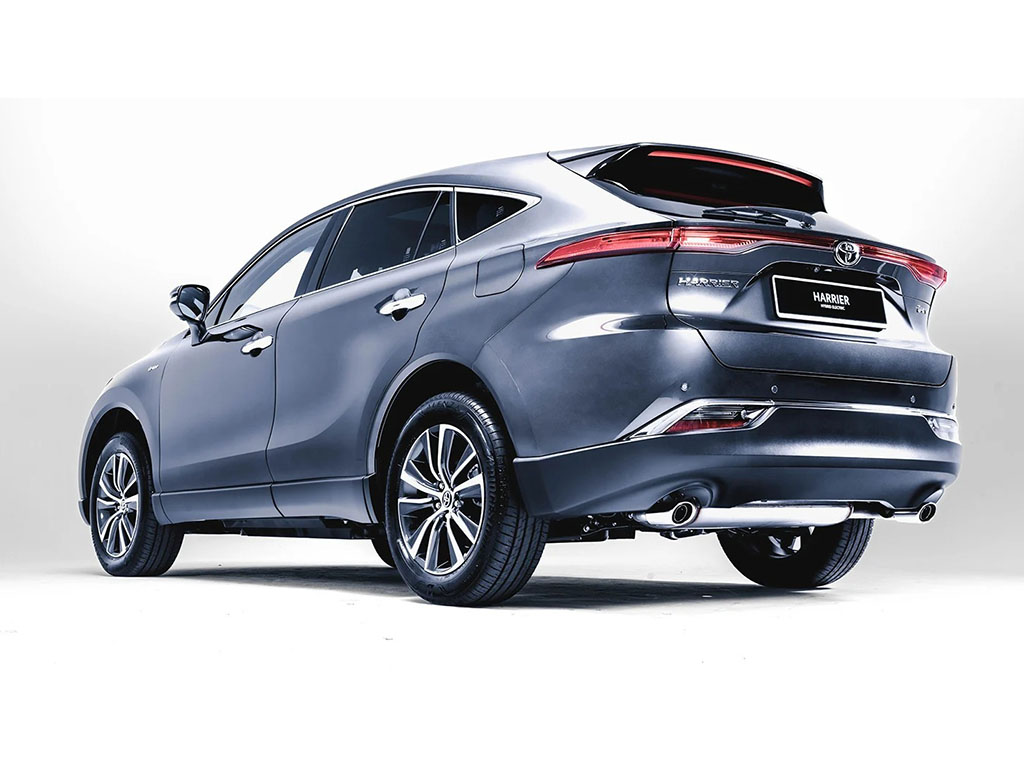
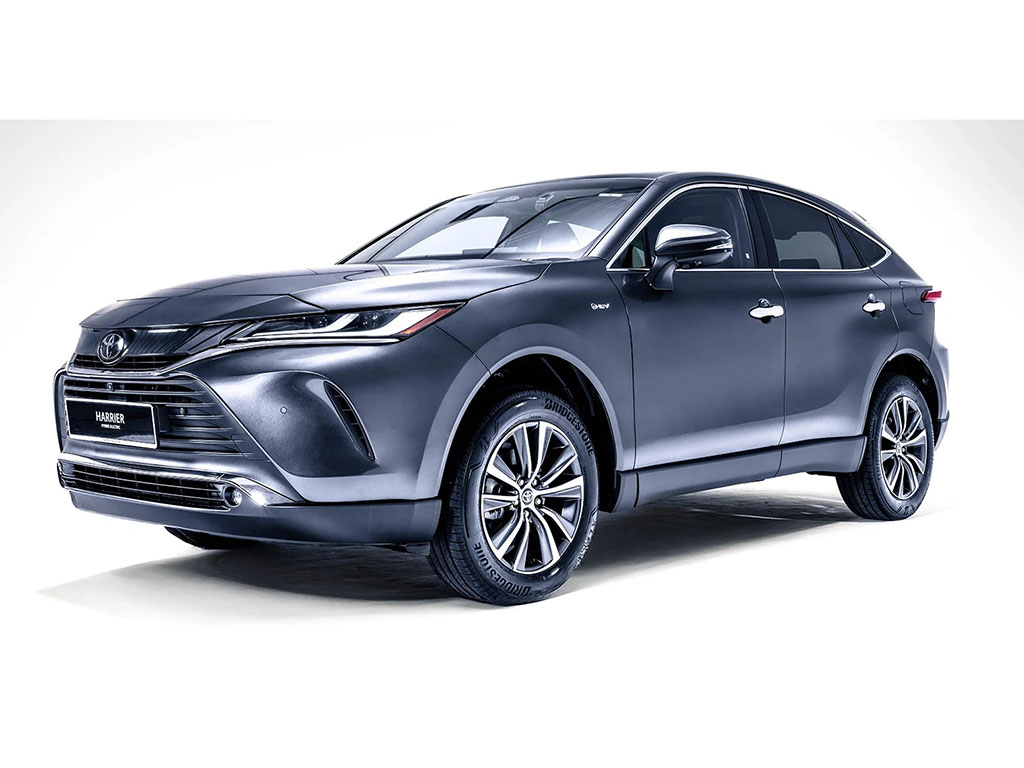
In body dimensions, the Harrier 2.5 HEV is in the category that sees the Honda CR-V, Mazda CX-5 and a host of Chinese brands that entered the Malaysian market over the last three to four years. Many of its rivals also come with far lower prices being locally assembled and include some of the imported Chinese range.
Its wheelbase of 2690mm is shorter than that of the two earlier mentioned Japanese brands. This probably has to do with the fact that from the third-generation model (XU60) introduced in 2013, the Harrier was developed from the Toyota RAV4 SUV platform. The current Harrier (XU80) is the fourth-generation model.
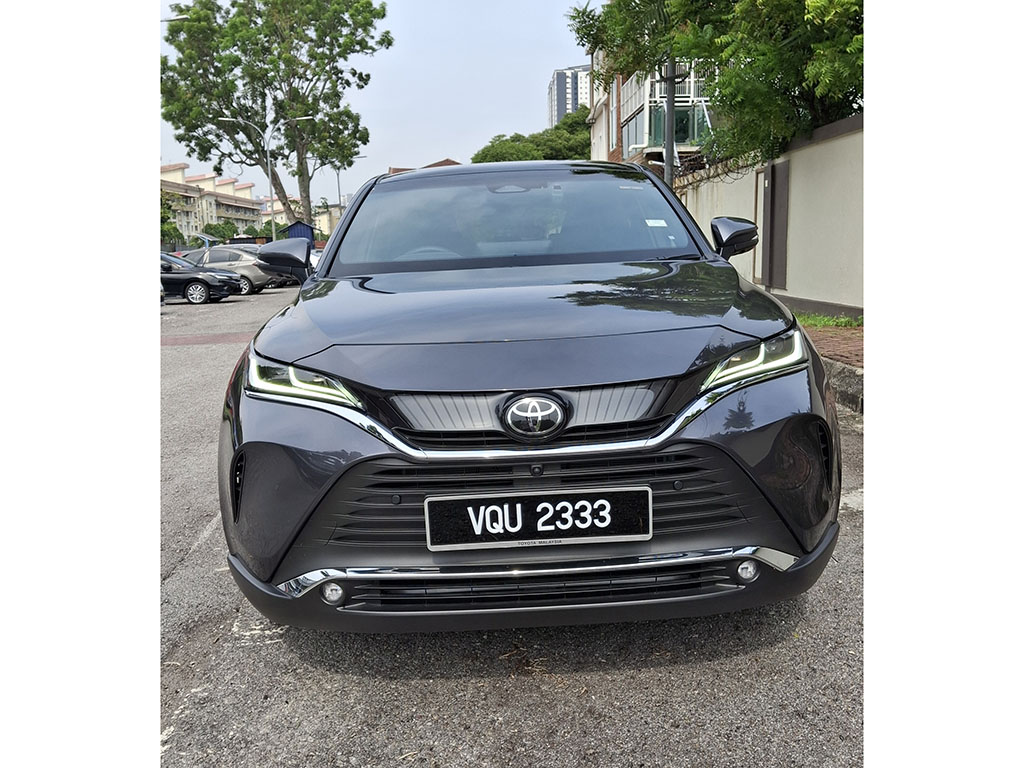
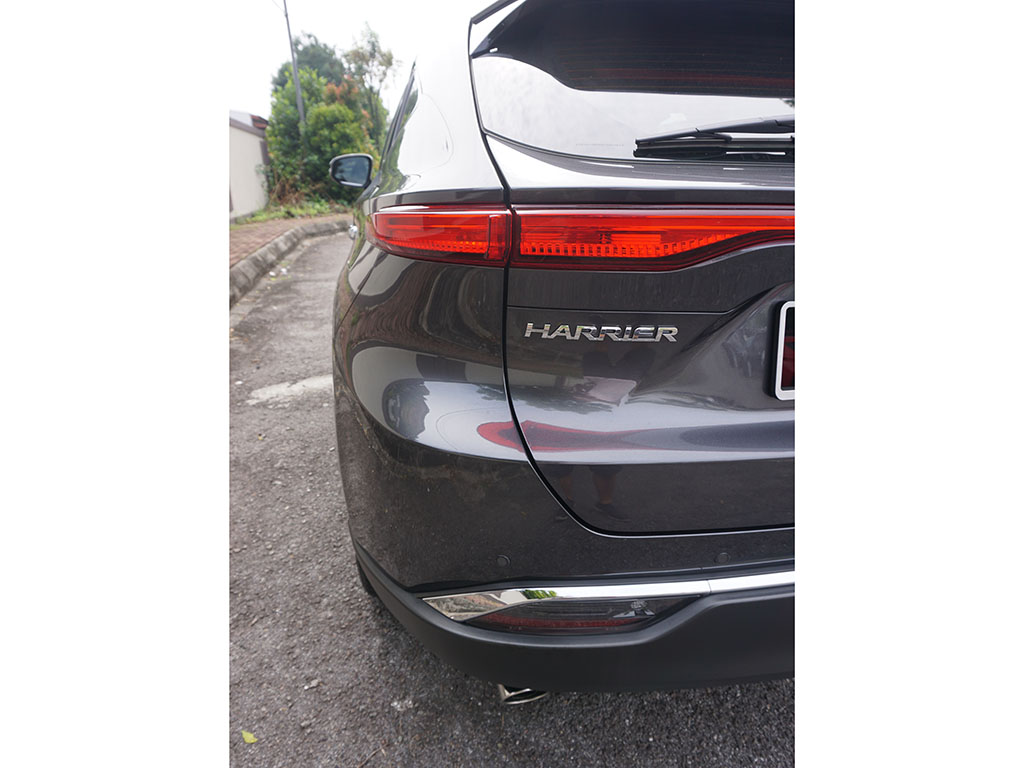
If you are wondering about its Harrier name, Toyota Japan chose to name this model after a bird of prey that is native to Hokkaido, the eastern marsh harrier. Earlier models carried an emblem of the bird in a stylised form on the grille. With the Harrier 2.5 HEV, this stylised harrier is only featured with the door mirror welcome light, which is best noticed at night or in dimly lit carparks.
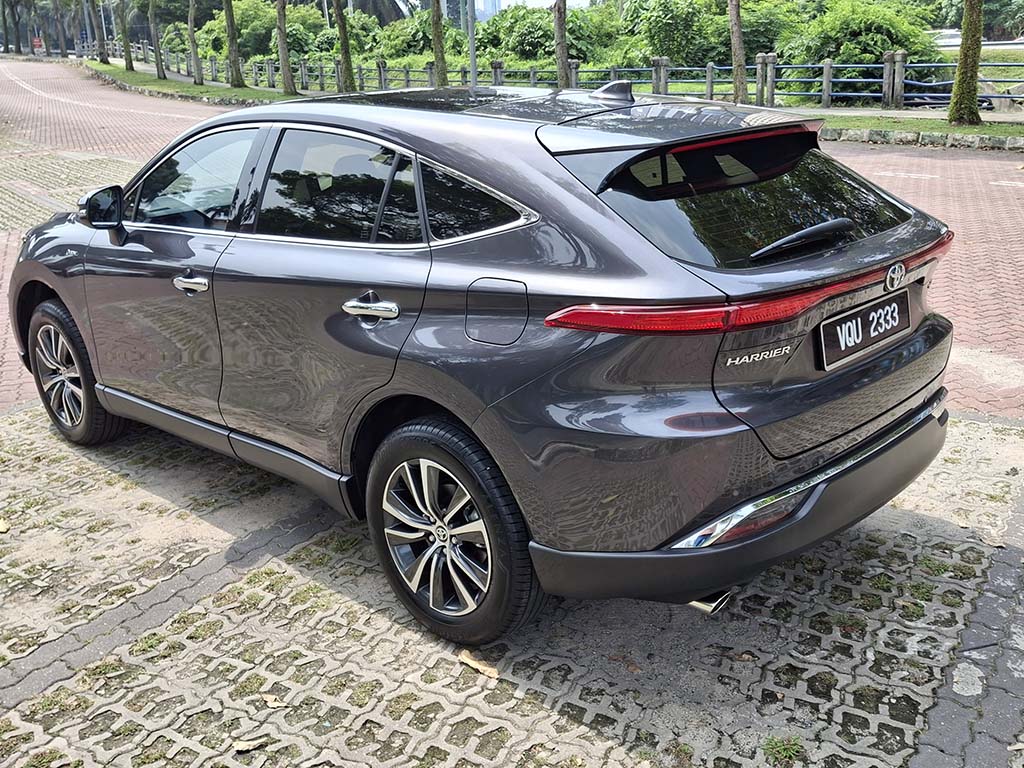
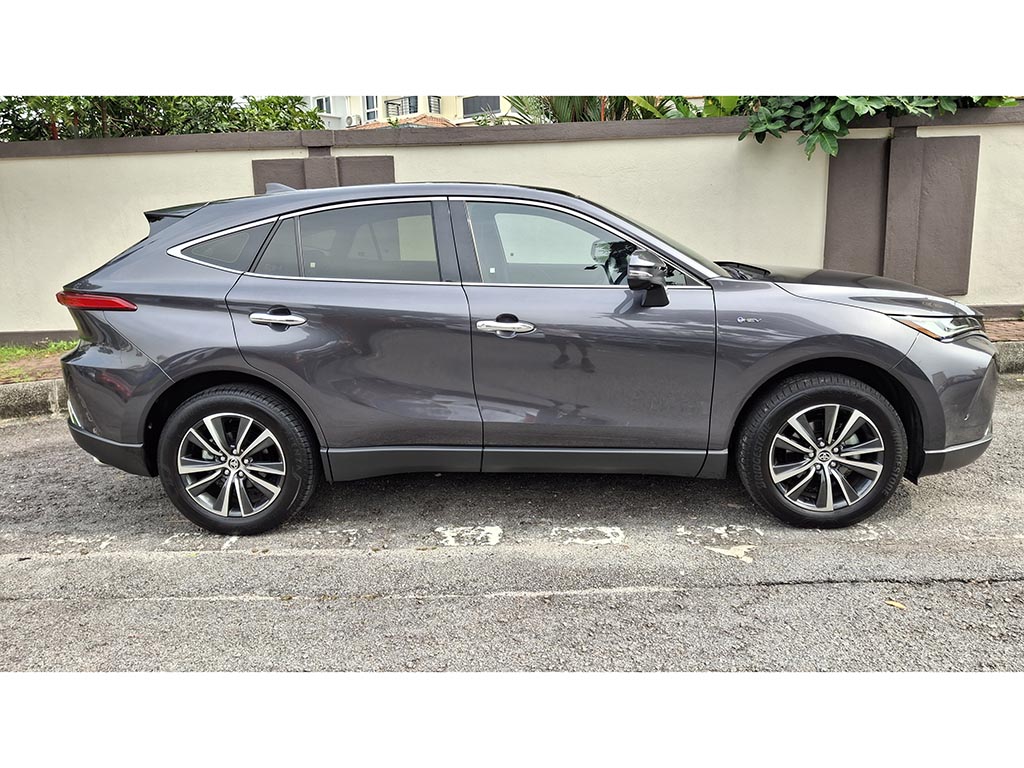
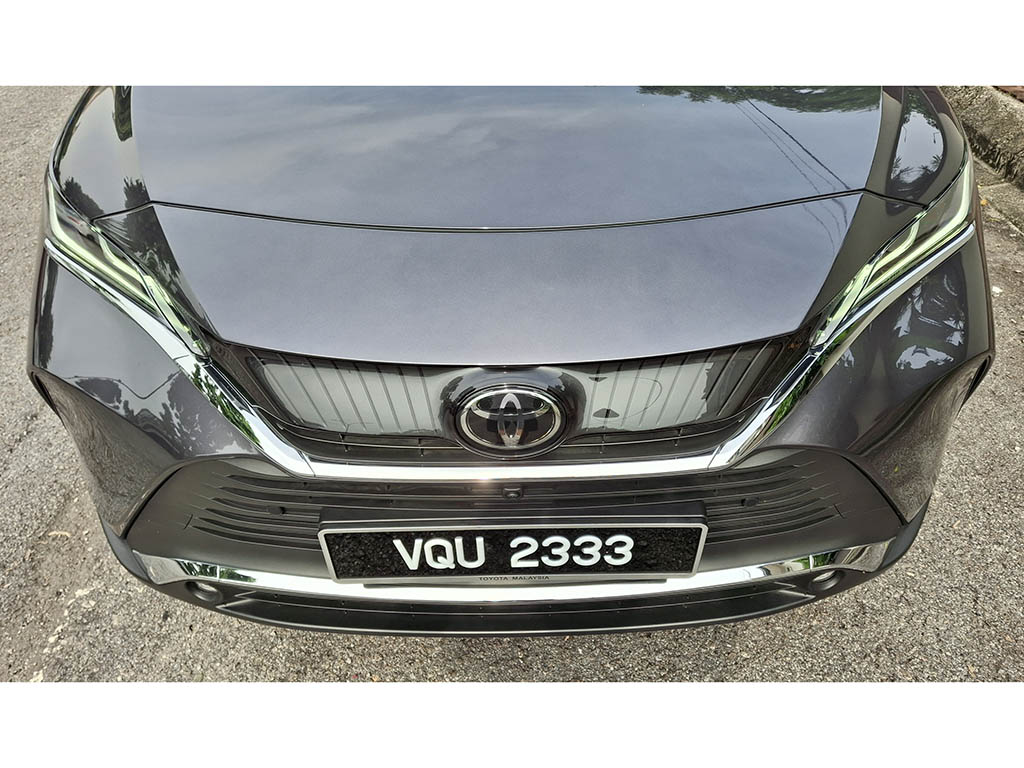
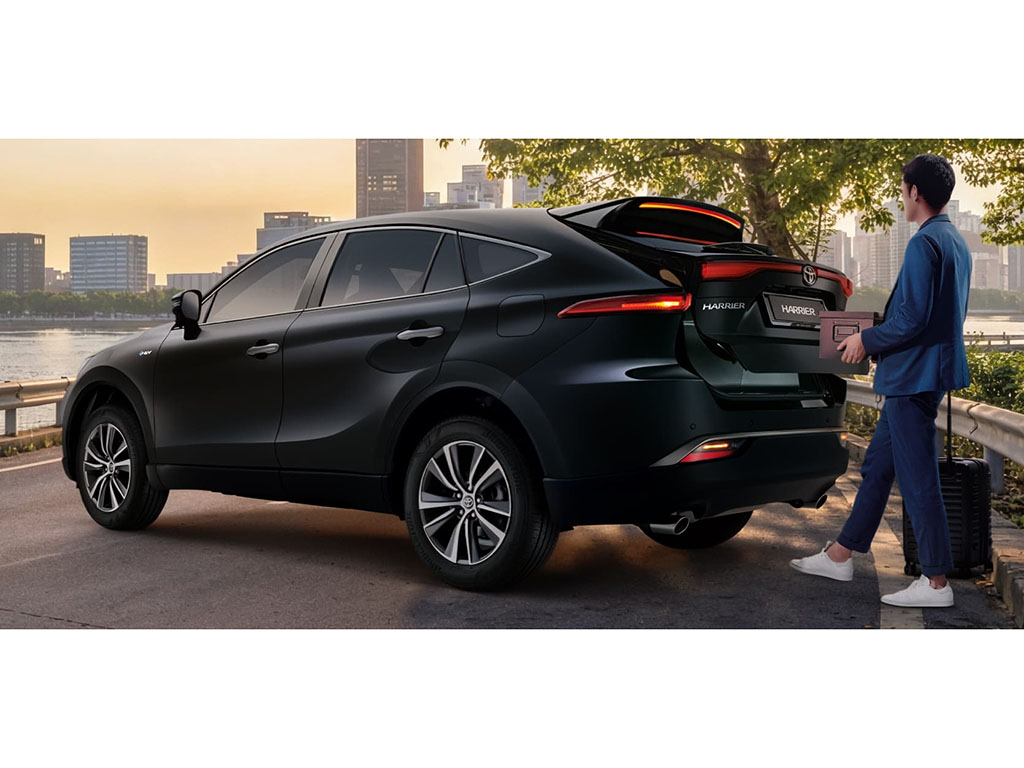
The Harrier 2.5 HEV has a slightly lower body height against our Mazda CX-5 with a body design that serves its aerodynamic stance in a sporty light. The racy visual impact would have been more impressive had the 18-inch alloy wheels been of a more striking and aggressive pattern than the somewhat mundane looking wheels. Fitted on them are 225/60 R18 Bridgestone Alenza tyres.
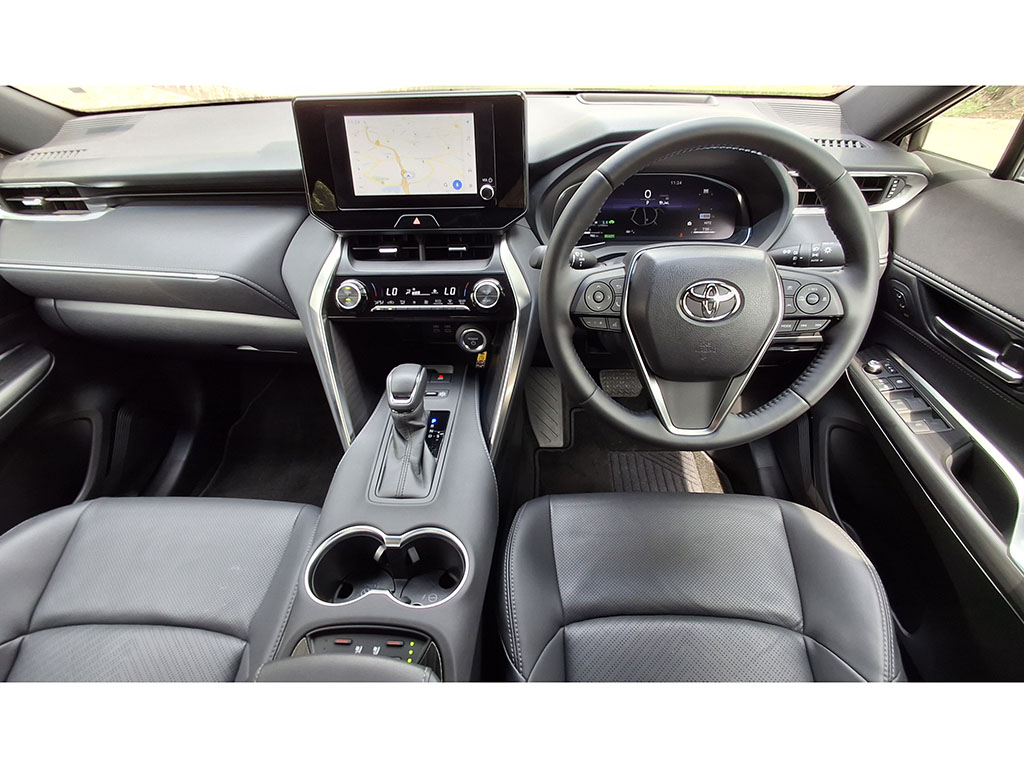
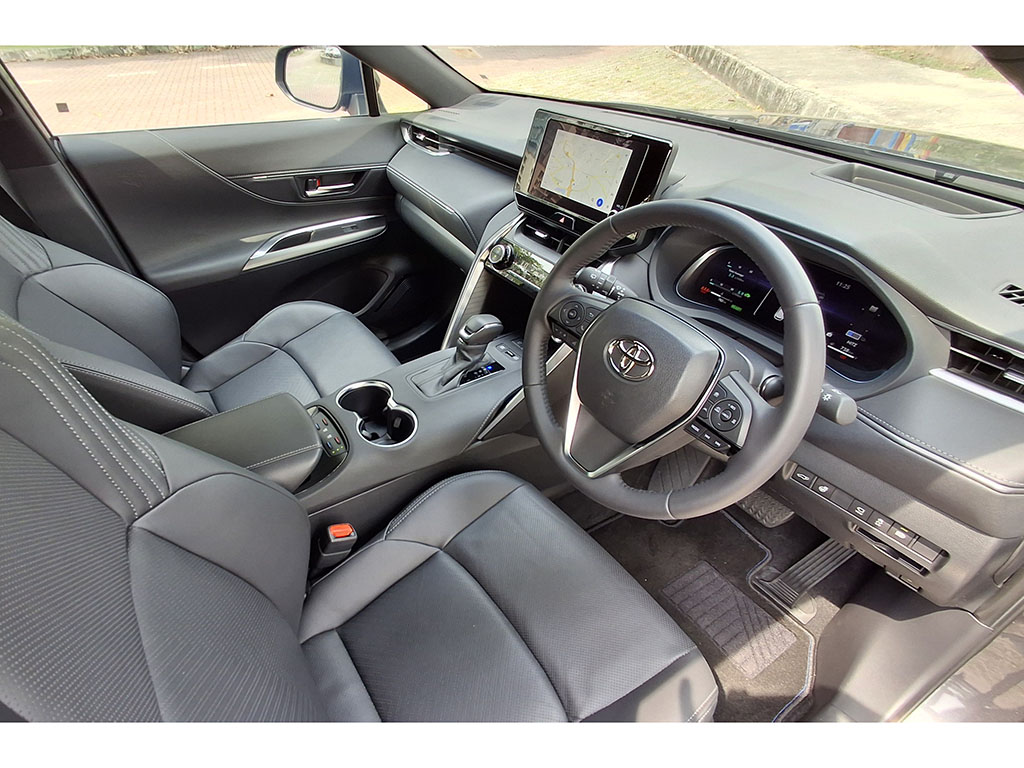
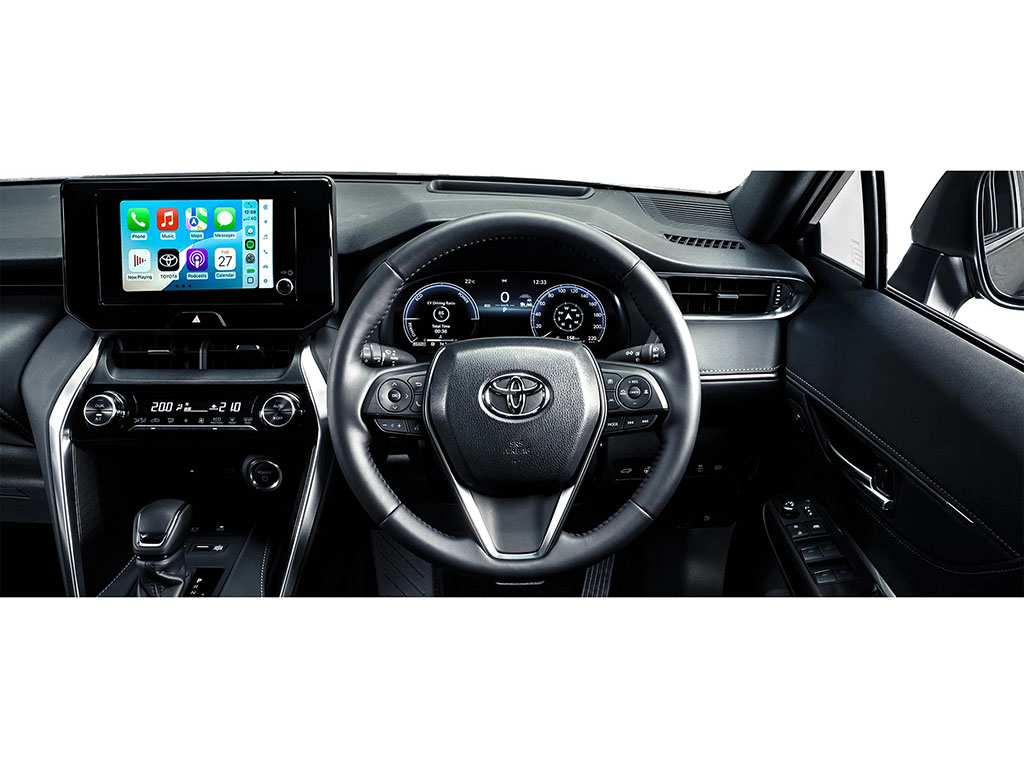
On opening the driver’s door, the driver’s seat is electronically moved rearwards to facilitate easy entry. On pressing the start button, which is located on the underside of the dashboard, just above the centre console, the seat would return to the last set position. That means after we adjusted the seat to our preferred position electronically, all subsequent seat returns would be to the position we had chosen.
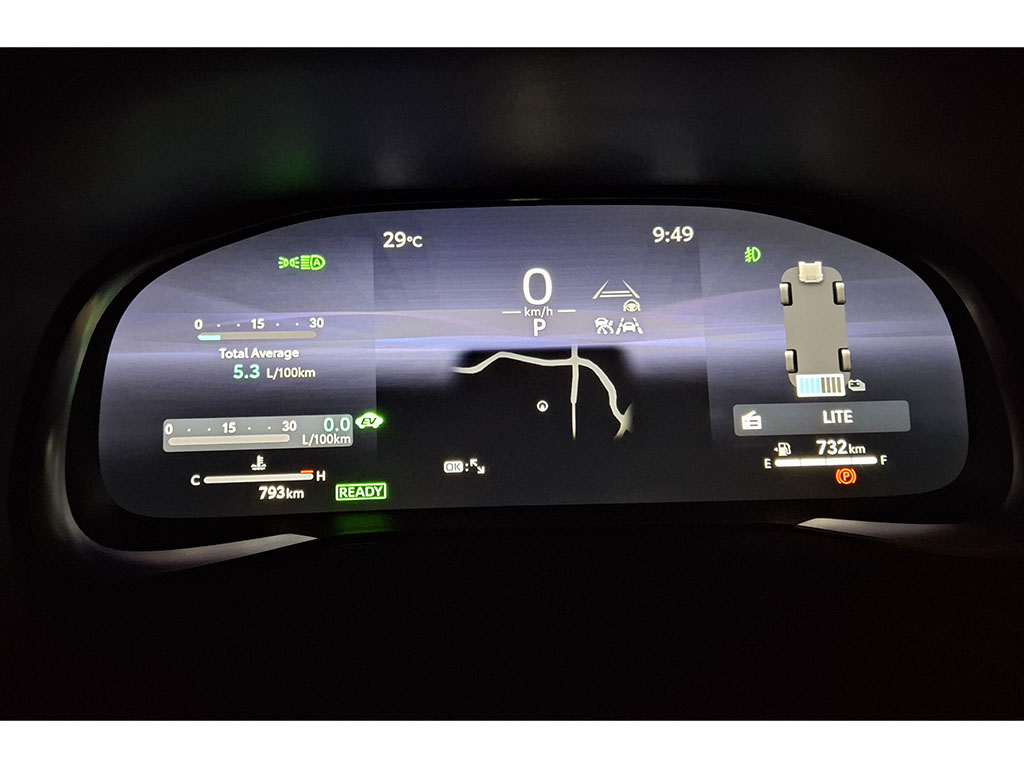
Being a hybrid, pressing the start button is a silent affair. There is no engine noise or the flicker of a needle on a tachometer. There is a power flow visual on the driver’s instrument panel that we recall being on the Prius we drove more than 20 years ago. It provides the level of battery charge and on the move, it actively shows what is the driving the front wheels, when the battery is charged and when the engine comes into play.
In traffic crawl situations, the battery is being recharged on deceleration and braking, and if you are gentle on the accelerator pedal, the battery would get the vehicle going until a certain road speed when the engine takes over. In a way, this encouraged us to be gentler on the accelerator to use less petrol to get going. The mileage available on picking up the Harrier and returning it three days differed little as it was still above 700km, although closer to 800km on pickup.
That’s the main advantage of driving a hybrid; using electric means to move in urban traffic and having the battery recharged often on slowing down and braking. We had the battery level up to 75 per cent at the highest although it would drop rather quickly on hard acceleration, especially during overtaking slower vehicles.
And being a vehicle with E-CVT, the engine did sound rather ‘revvy’ as it picked up speed to get going quickly, which was typical of vehicles with such transmissions. Driven at normal speeds, the Harrier 2.5 HEV was right at home cruising quietly on highways or moving around in urban centres.
It was pretty good in handling winding stretches too; it took to our favourite corners and sweepers just as quickly as our Mazda CX-5. There might be a bit more body lean but the Harrier 2.5 HEV would hold its own as we explored its handling limits. The suspension system sees an independently MacPherson strut front and a multi-link trailing wishbone design.
In ride comfort, the Harrier 2.5 HEV had softer damping over the various road undulations we covered daily. The road impacts felt better cushioned and absorbed during normal driving speeds; it did get a bit hard if you drive too fast or hit a big bump, but it was not jarring. That is a positive note for the ride comfort, which was also enjoyed on highway drives. The good body aerodynamics also contributed to that with minimal air turbulence and good body insulation reducing noise intrusion effectively.
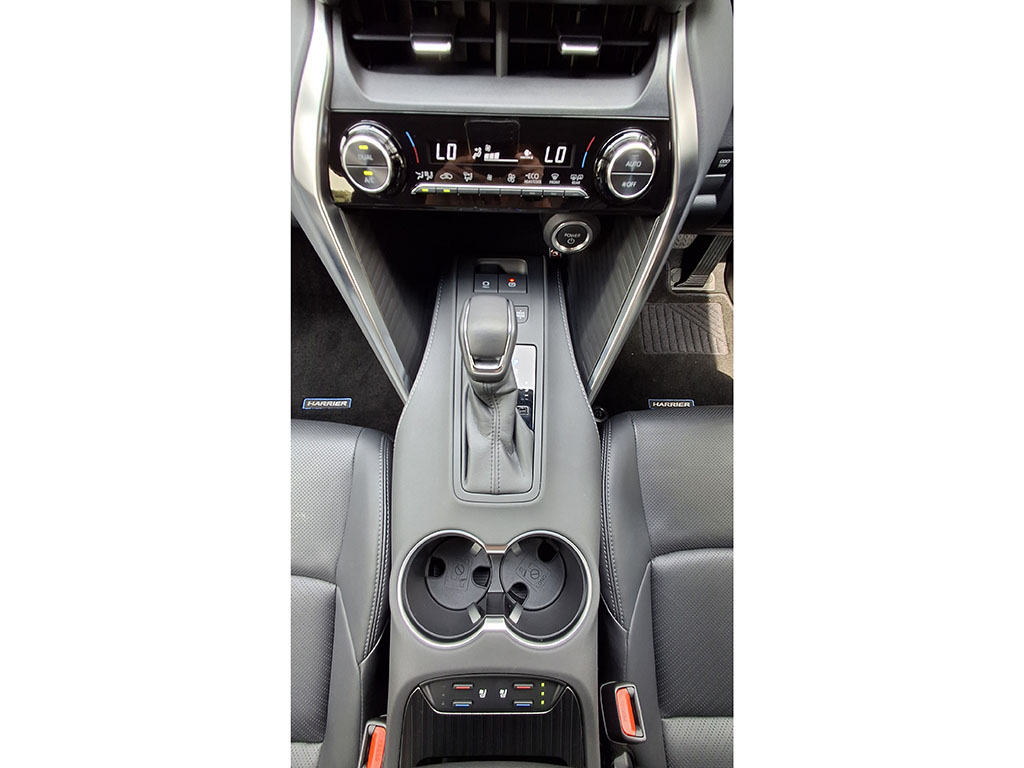
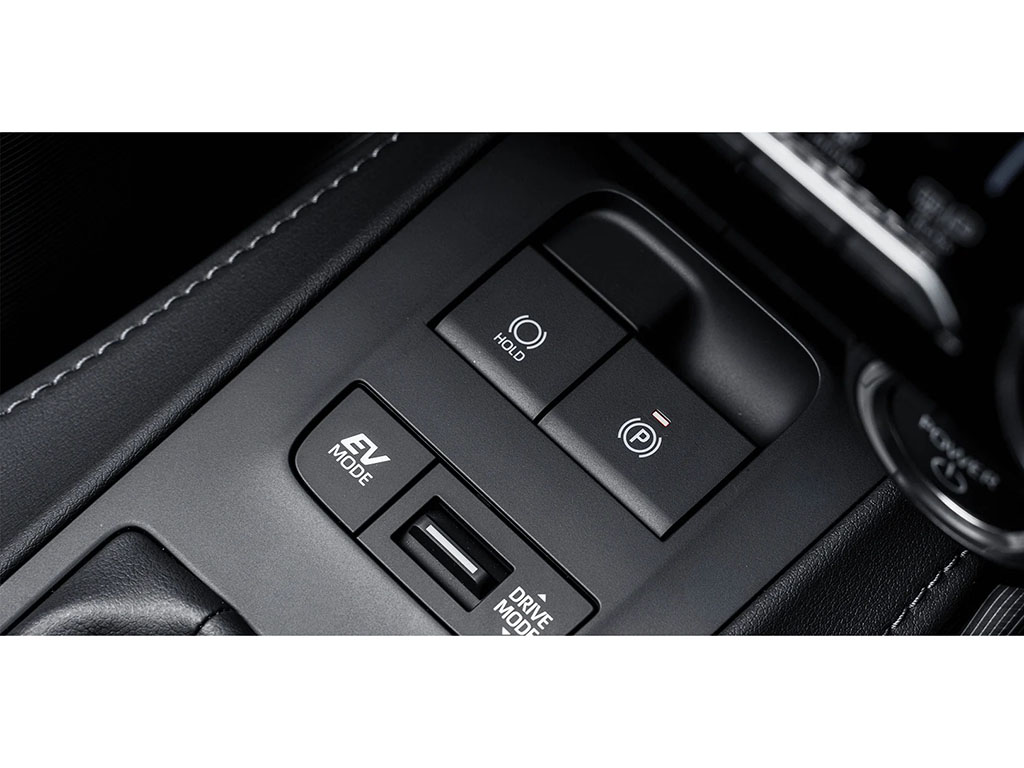
From the driver’s perspective, we like the fact that when we pushed the gearshift to D(rive), the electronically activated handbrake would be disengaged. Likewise, when we pushed the shift to P(ark) on coming to a stop, the handbrake would be activated. If you wish to engage the handbrake while in N(eutral), you could do so via a dedicated button on the central console, near the Drive Mode selector (Econ, Normal, Sport and EV).
There are no steering wheel paddle shift selectors and if you move the gearshift to S(ports), you could revel in the thrill of selecting the electronically set ‘gears’ of the E-CVT by moving the shift up or down. We also like the electronic adjustment of the steering wheel for height and reach, which keeps well within its premium standing.
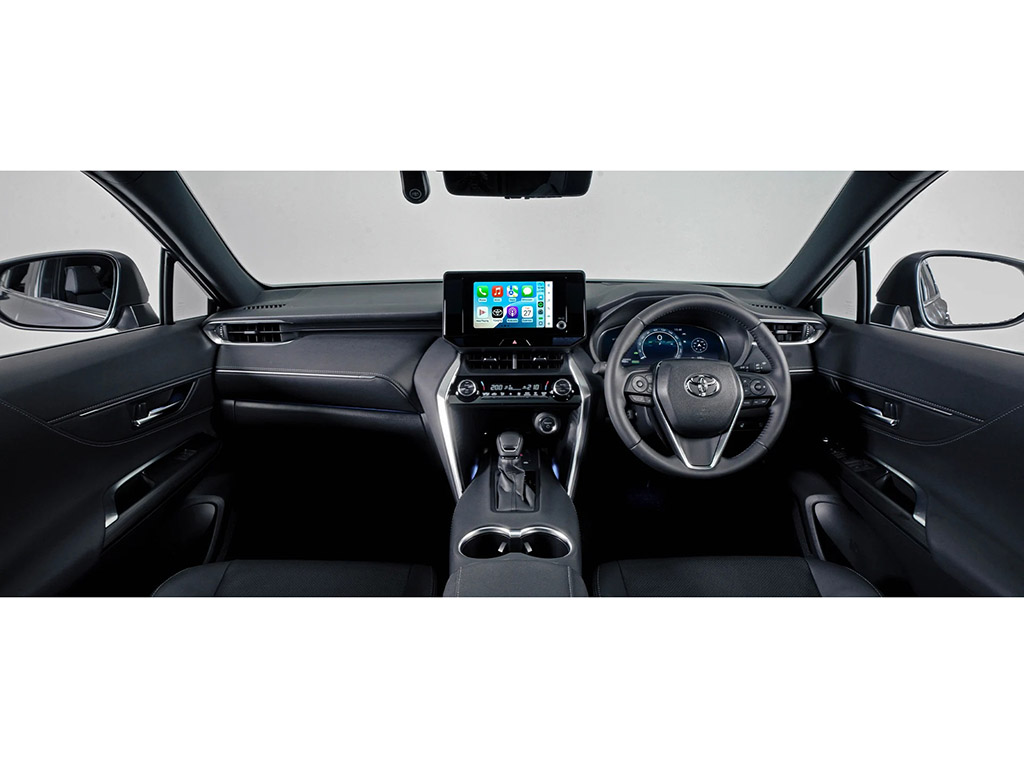
A 10.5-inch HUD (head-up display) comes part and parcel that provides you road speed, the respective road speed limit, lane discipline and selected gear position. Of course, the driver instrument panel has a lot more information. Other than the power flow visual, there are information on the average fuel consumption, the radio station you have selected, GPS, among others. You could select a different panel as well for other information.
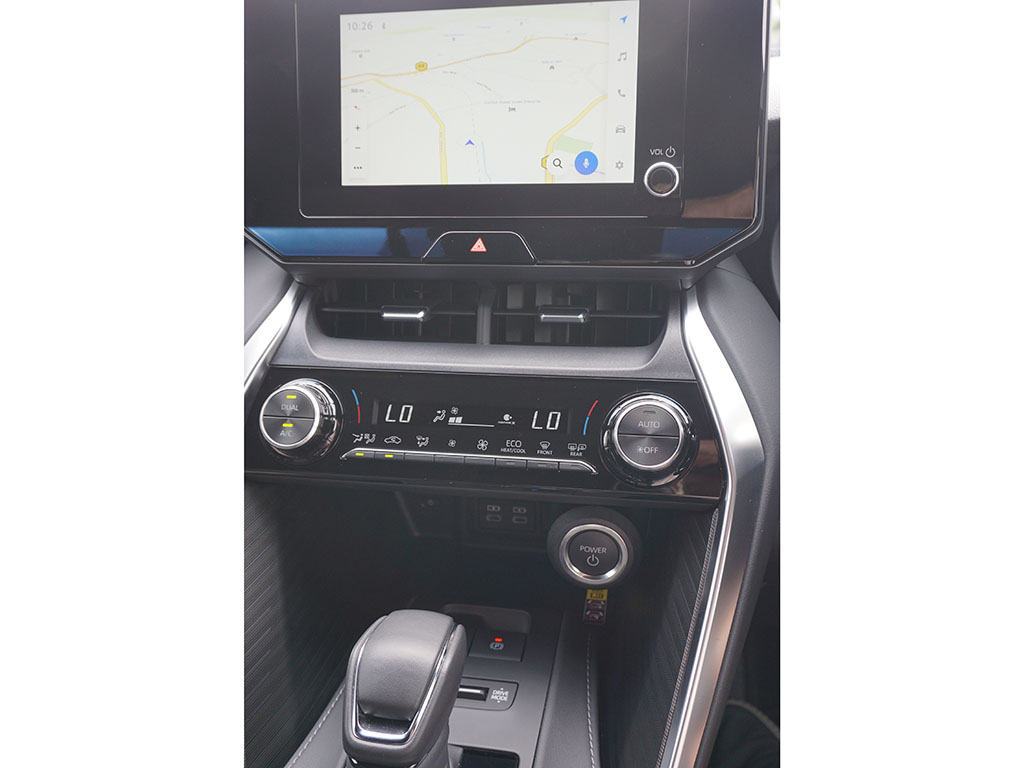
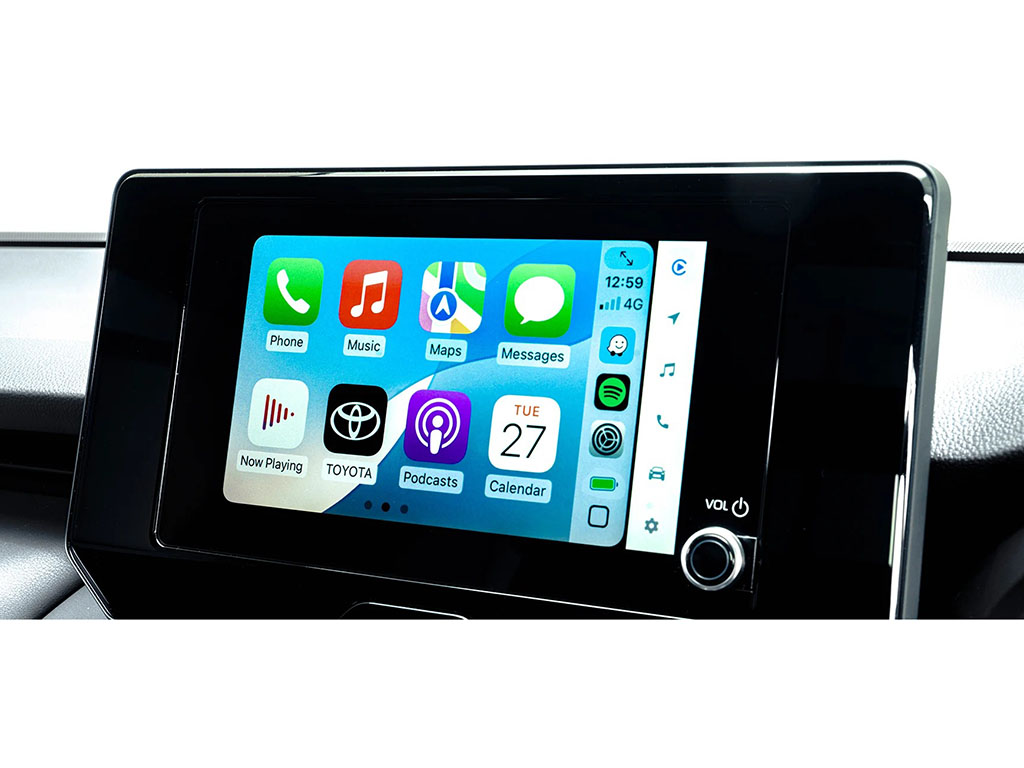
The 12.3-inch multi-information display has icons that allow us to access the various functions easily such as the radio channels, GPS and making calls. Adjusting the volume for the eight-speaker system is via a small knob though. Likewise, the controls for the air-conditioning system are on a panel below the front centre air vents.
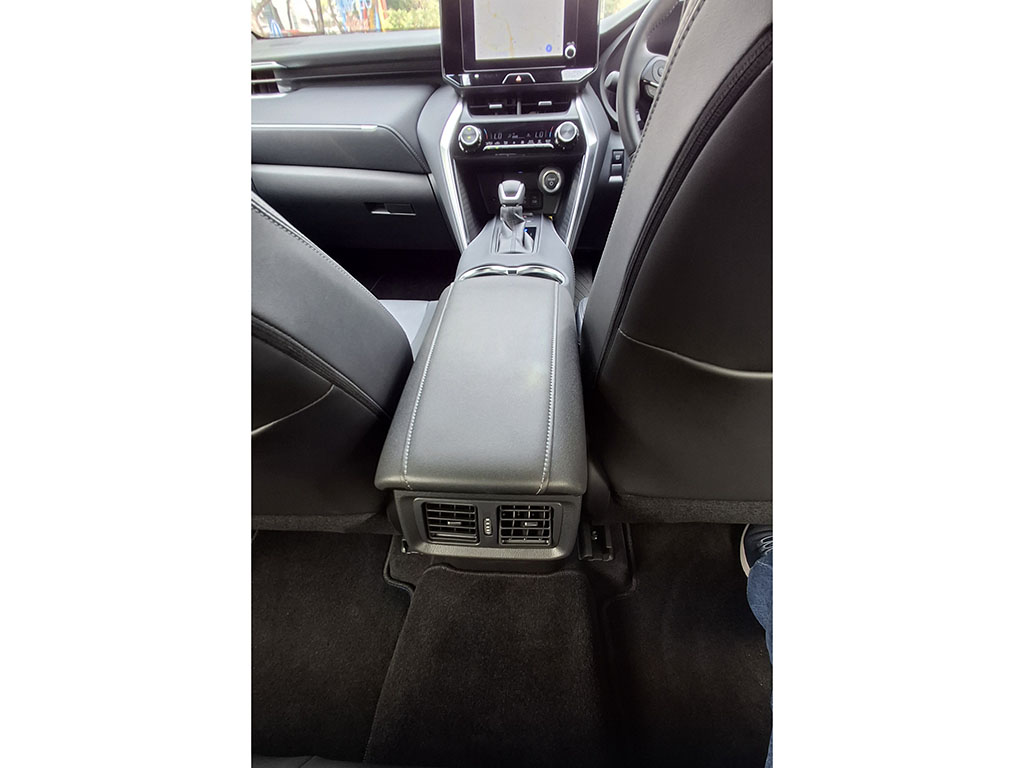
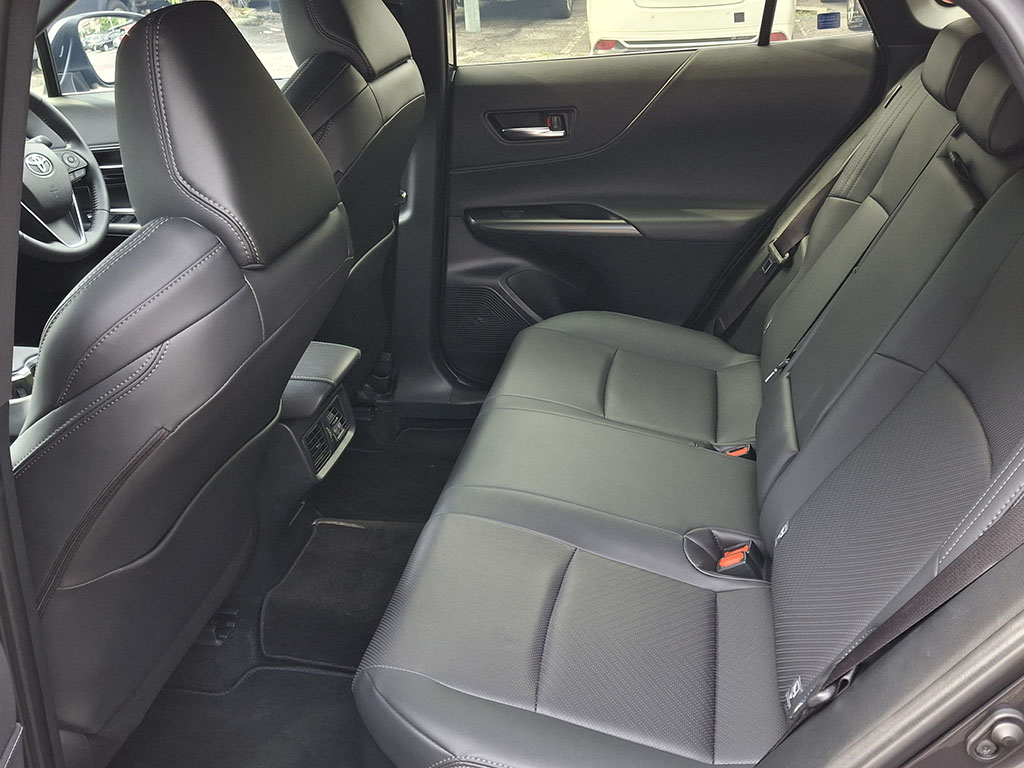
Seats are wrapped in black combination leather with black stitching, steering wheel is wrapped in leather and the door panels have leather with black trim. For an SUV with a slightly shorter wheelbase, interior room felt spacious enough with reasonably good headroom and elbow room. Rear seat passengers were not short of lounge space for their legs.
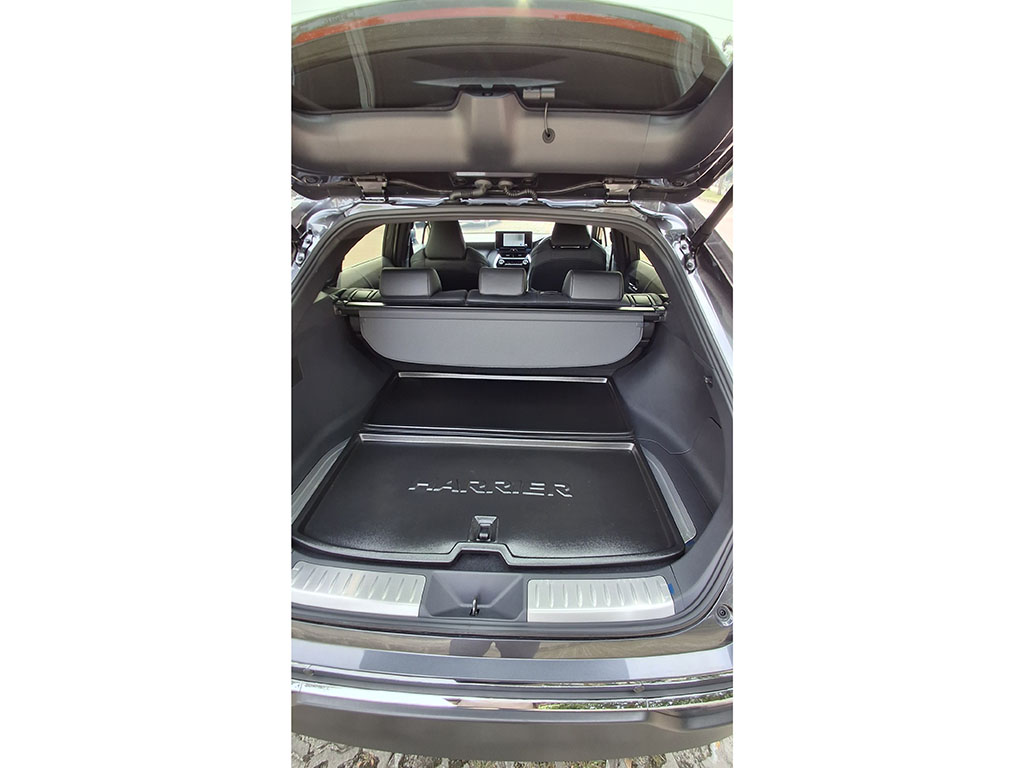
The rear seat rests are split 60:40 to extend luggage space and the rear tailgate is electronically operated. A panoramic sunroof comes standard as well as the RFID (radio frequency identity) feature for use at the toll booths. The Toyota Safety Sense has a full suite of active safety systems to complement the passive ones and a tyre pressure monitoring system (TPMS) is standard feature.
At the end of the day, the decision is very much on the prospective customer. To pay more for the premium McCoy in the Harrier 2.5 HEV and enjoy peace of mind with full vehicle and hybrid warranty coverage. Or settle for a three- to four-year-old used or reconditioned alternative at about two-thirds of the price (it is not exactly cheap either) and vague vehicle warranties and service programmes, if any, and which again might vary among the respective company selling the recon Harrier.